
Blog Detail
- Oct 21, 2026
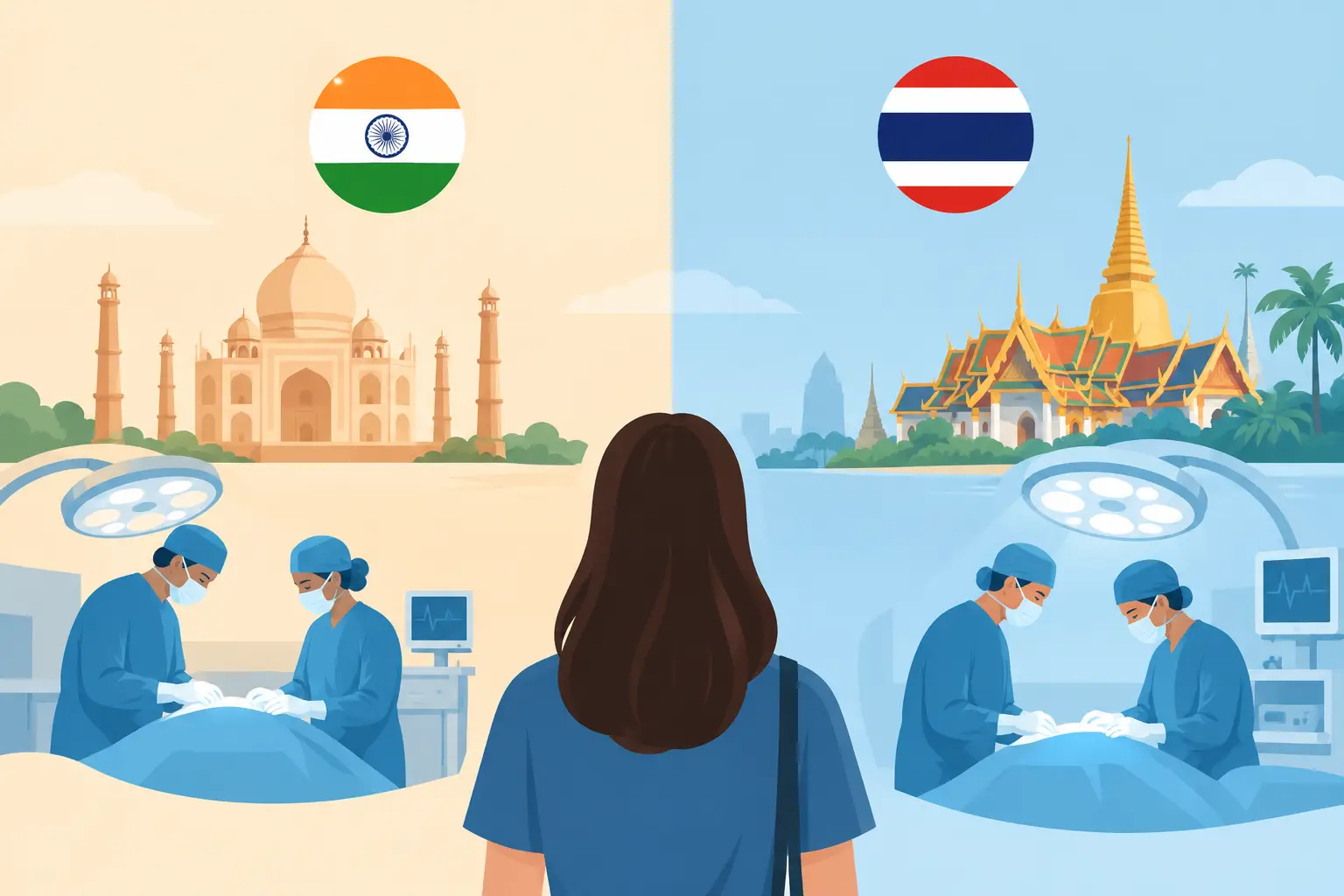
For New Zealanders facing a long wait, an unaffordable private quote, or declining mobility, India versus Thailand surgery is not simply a question of choosing the cheaper destination. It is a decision about the right specialist, hospital, treatment timeline and recovery plan for your particular condition. Both countries offer internationally accredited private hospitals, experienced surgeons and modern technology. The better choice depends on what you need treated and the support you need around it.
India versus Thailand surgery: the decision behind the destination
Thailand has built a strong reputation for private international healthcare. Its leading hospitals are accustomed to caring for overseas patients, and many have dedicated international patient teams, English-speaking clinicians and well-established systems for arranging appointments, accommodation and local transport. For patients who want a familiar medical-tourism pathway with a straightforward travel experience, Thailand can be a compelling option.
India offers exceptional scale and depth in complex specialist medicine. Major private hospital groups in cities such as Delhi, Mumbai, Chennai, Bengaluru and Hyderabad treat large numbers of international patients and often bring together highly specialised multidisciplinary teams. India can be particularly attractive for complex cardiac care, joint replacement, spine surgery, oncology, kidney transplantation, urology and robotic procedures.
Neither country is automatically “best”. A highly regarded hospital in either destination may be an excellent fit, while a lower-cost option without verified standards, clear surgeon credentials or proper follow-up planning may not be. The hospital and clinical team should lead the decision, not the country alone.
Clinical expertise and treatment strengths
For planned orthopaedic procedures such as hip and knee replacement, both India and Thailand offer high-quality private hospitals with modern operating theatres, imaging, rehabilitation services and implant options. Your comparison should focus on the orthopaedic surgeon’s experience with your procedure, the proposed implant, infection-control protocols, expected hospital stay and the rehabilitation plan before you travel home.
India’s breadth can be valuable where a condition involves several specialties. A patient requiring cardiac surgery alongside diabetes management, for example, may benefit from access to cardiology, endocrinology, intensive care and cardiac rehabilitation within one large tertiary hospital. India is also widely considered by patients seeking advanced cardiac interventions, complex spine procedures, cancer treatment and transplant-related care, subject to clinical eligibility and local regulations.
Thailand is often appealing for elective surgery where the clinical pathway is clearly defined and the patient values a polished international service environment. This can include orthopaedics, bariatric surgery, urology, fertility care and selected cardiac or spinal procedures. Leading Thai hospitals also provide sophisticated diagnostic and surgical capability, but availability varies by hospital and city.
For IVF and fertility treatment, the decision is especially personal. Laws, treatment availability, laboratory standards, donor arrangements and eligibility requirements can differ between countries and can change over time. Couples should receive a written treatment plan and a full explanation of what is included before committing to travel.
Ask about the surgeon, not only the hospital name
A hospital’s accreditation is an important indicator of systems and governance, but it does not replace surgeon-specific research. Ask for the surgeon’s qualifications, area of subspecialty practice, experience with the proposed procedure and the role they will personally play in your care. It is also reasonable to ask how complications are managed, whether an ICU is available when relevant, and who will be your clinical contact after discharge.
Accreditation should be verified for the specific hospital you are considering. International benchmarks, including Joint Commission International accreditation where applicable, can provide useful assurance that a facility is assessed against recognised patient safety and quality standards. They are one part of the picture, alongside clinical fit, transparent information and a realistic recovery plan.
Cost: look beyond the surgery quote
The headline cost is often lower in India than in Thailand, particularly for complex procedures performed in large Indian hospital networks. Thailand can still represent substantial savings compared with private treatment in New Zealand, especially where a faster pathway avoids months of ongoing pain, reduced work capacity or repeated appointments.
However, a low package price does not always mean a lower overall cost. A meaningful comparison should show whether the quote includes surgeon and anaesthetist fees, theatre charges, implants or prostheses, hospital accommodation, medicines, routine diagnostics, physiotherapy, airport transfers and follow-up appointments. For more complex treatment, ask whether ICU care, blood products, additional investigations or an extended stay would be charged separately.
Travel costs also matter. Thailand may be simpler or less expensive for some families depending on flights, hotel choice and the length of recovery required. India may offer a better value clinical package but require a longer stay, additional companion support or travel via a connecting flight. The right comparison is the total expected journey cost, with a clear allowance for contingencies.
For many patients, overseas care can offer savings of 60 to 80 per cent compared with New Zealand private treatment costs. That range is not a promise for every procedure. Your actual saving depends on your diagnosis, implant choice, hospital, length of stay, travel arrangements and whether your care needs change after assessment.
Travel, comfort and recovery considerations
Surgery is only one part of the journey. A knee replacement patient may need several weeks before long-haul air travel is clinically appropriate. A patient having cardiac surgery, spinal surgery or cancer treatment may need longer, with clearance from their treating team before flying. The safest timing is determined by your surgeon and individual recovery, not by a pre-booked return date.
Thailand’s international healthcare infrastructure can feel particularly accessible for first-time medical travellers. In major private hospitals, English communication is commonly available, and visitors often find it easy to arrange accommodation close to the hospital. India also has highly experienced international patient services, but the day-to-day environment can be more intense, especially in large cities. Some patients appreciate the energy and choice; others prefer a quieter, more contained setting.
A companion can make a major difference after surgery. They may help with meals, medication reminders, mobility and communication, while also providing reassurance during an unfamiliar experience. When comparing destinations, consider the practical details: hotel accessibility, distance from hospital, availability of a wheelchair-friendly vehicle, dietary needs, interpreter support if needed, and the cost of staying longer than planned.
When India may be the better fit
India may suit New Zealand patients who need complex or highly specialised treatment, want access to large tertiary hospitals, or are looking for strong value on a clinically detailed procedure. It can be a practical option where access to a particular subspecialist, robotic platform or multidisciplinary team matters more than a resort-style recovery setting.
It may also be a strong choice for patients who have already been advised that their case is complex, such as revision joint surgery, multi-level spine surgery, advanced cardiac treatment or cancer care requiring coordinated specialties. A thorough review of your records before travel is essential in these situations.
When Thailand may be the better fit
Thailand may be better suited to patients seeking a well-established international hospital experience for a planned elective procedure, with close attention to comfort, communication and recovery logistics. It can be a good option for straightforward orthopaedic care, fertility treatment and other procedures where the relevant specialist and hospital have confirmed a clear pathway.
Patients who feel anxious about travelling for treatment may value Thailand’s mature medical-tourism support services. That said, reassurance should come from a confirmed clinical plan and trusted coordination, rather than assumptions about the destination.
Build a safer overseas care plan
Before accepting any overseas surgery proposal, provide recent scans, test results, specialist letters and a concise medical history for clinical review. Make sure you understand the diagnosis, intended procedure, expected outcomes, material risks and alternatives, including treatment in New Zealand. You should also disclose medications, allergies, previous operations and any conditions that could affect anaesthetic or recovery risk.
A coordinated pathway should cover more than a hospital booking. It should include a written cost estimate, confirmed treatment inclusions, travel timing that reflects medical advice, accommodation suited to recovery, transfer arrangements and a plan for returning to your GP, specialist or physiotherapist in New Zealand. Insurance needs careful attention too, as standard travel cover may exclude planned treatment or complications related to it.
Wellaway Meditours helps New Zealand patients compare accredited hospital options and organise the practical details around treatment, from clinical coordination and transparent costs to travel, accommodation and post-treatment support. The aim is not to rush a decision, but to make sure it is informed and manageable.
The right destination is the one where your treatment plan is clinically sound, your costs are clear and your recovery has been properly planned. When those foundations are in place, choosing between India and Thailand becomes less about taking a leap overseas and more about taking a considered step towards care on your timeline.